 Skip to content
Busbar Machine – CNC Solutions for Precision Copper & Aluminum Processing
A ‘busbar machine’ is a specialized CNC solution designed for high-precision processing of copper and aluminum busbars, including punching, cutting, and bending operations used in electrical switchgear, panel board, transformer, and power distribution manufacturing. By integrating automated CNC control with robust mechanical design, these machines ensure consistent accuracy, repeatability, and efficiency — essential for modern industrial production environments.
As a trusted manufacturer with over 10 years of dedicated experience, ‘LT Busbar Machine’ has been developing, producing, and servicing advanced busbar processing equipment for more than two decades. Our product range includes CNC busbar punching and cutting machines, CNC busbar bending machines, turret processing machines, busbar leveling machines, and complete automatic busbar processing lines. With ISO & CE certifications, patented technology, and a global footprint spanning Russia, India, South Korea, Vietnam, Canada, Australia and beyond, our CNC busbar machines are widely recognized for precision, durability, and professional after-sales support.
HQ600-SP CNC Busbar Punching and Shearing BUSBAR MACHINE

Price 59990$-99900$
HQ400-B CNC BUSBAR BENDING MACHINE
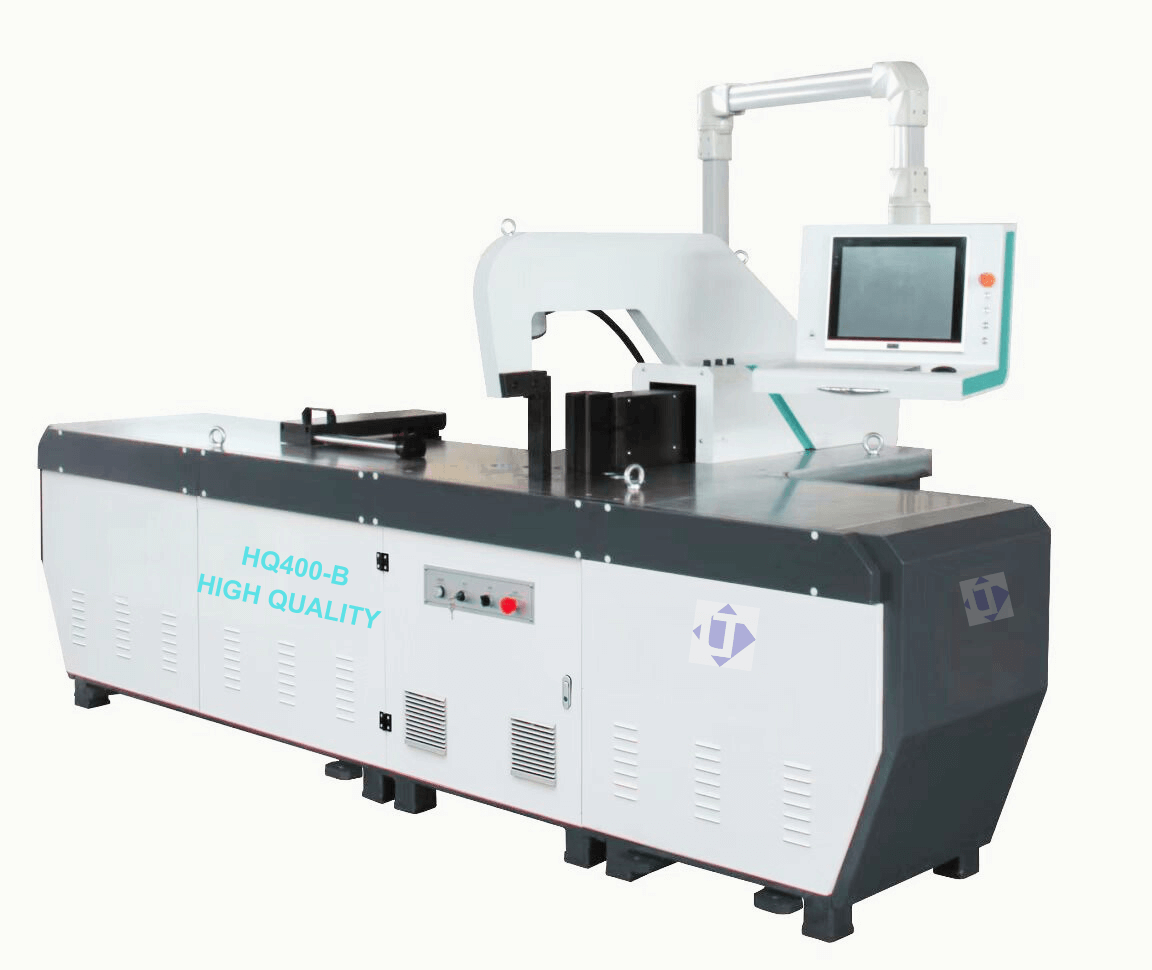
Price 15490$-35,700$
303U-3-C 3 IN 1 CNC BUSBAR MACHINE
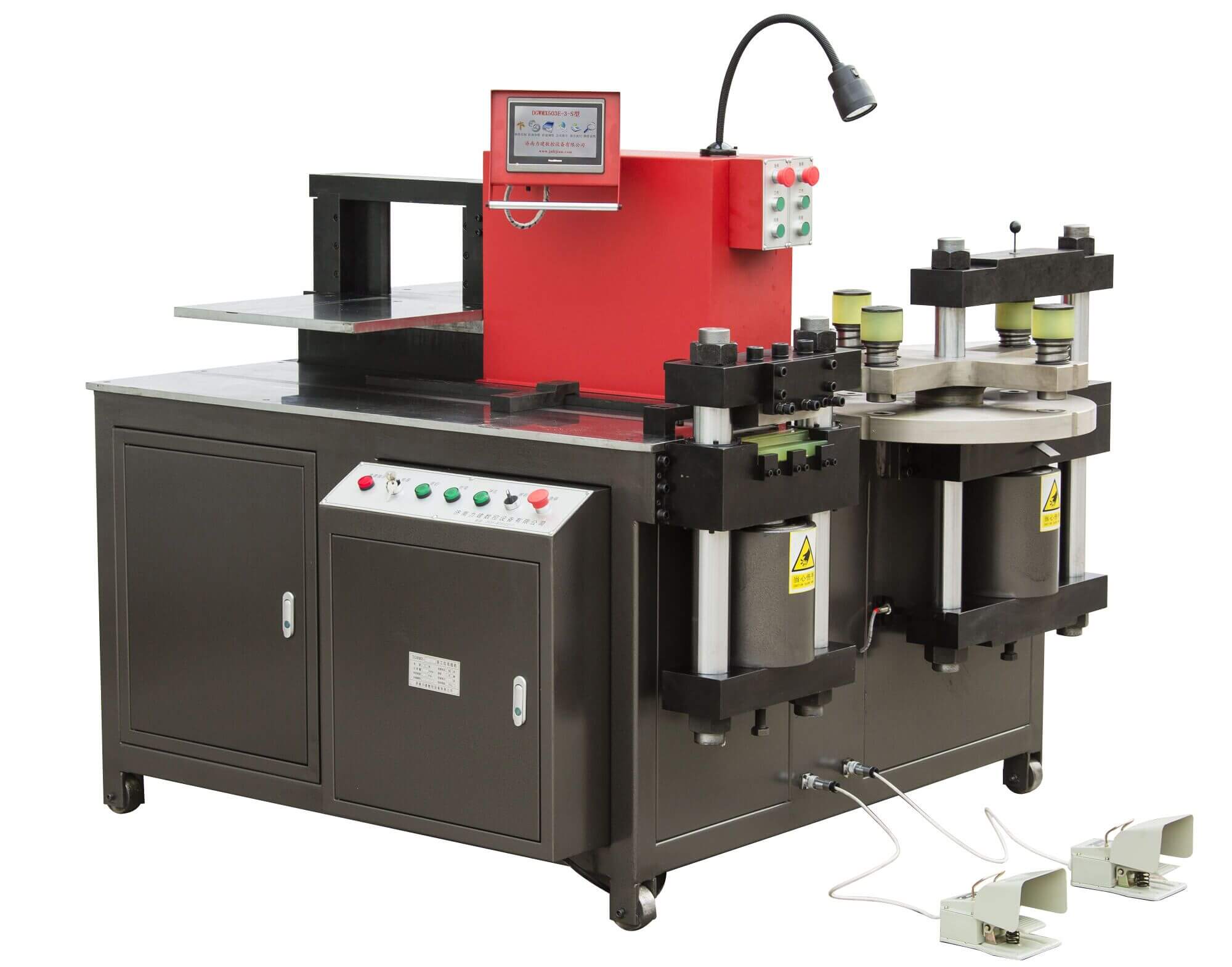
HQ160-M CNC BUSBAR ARC MILLING MACHINE
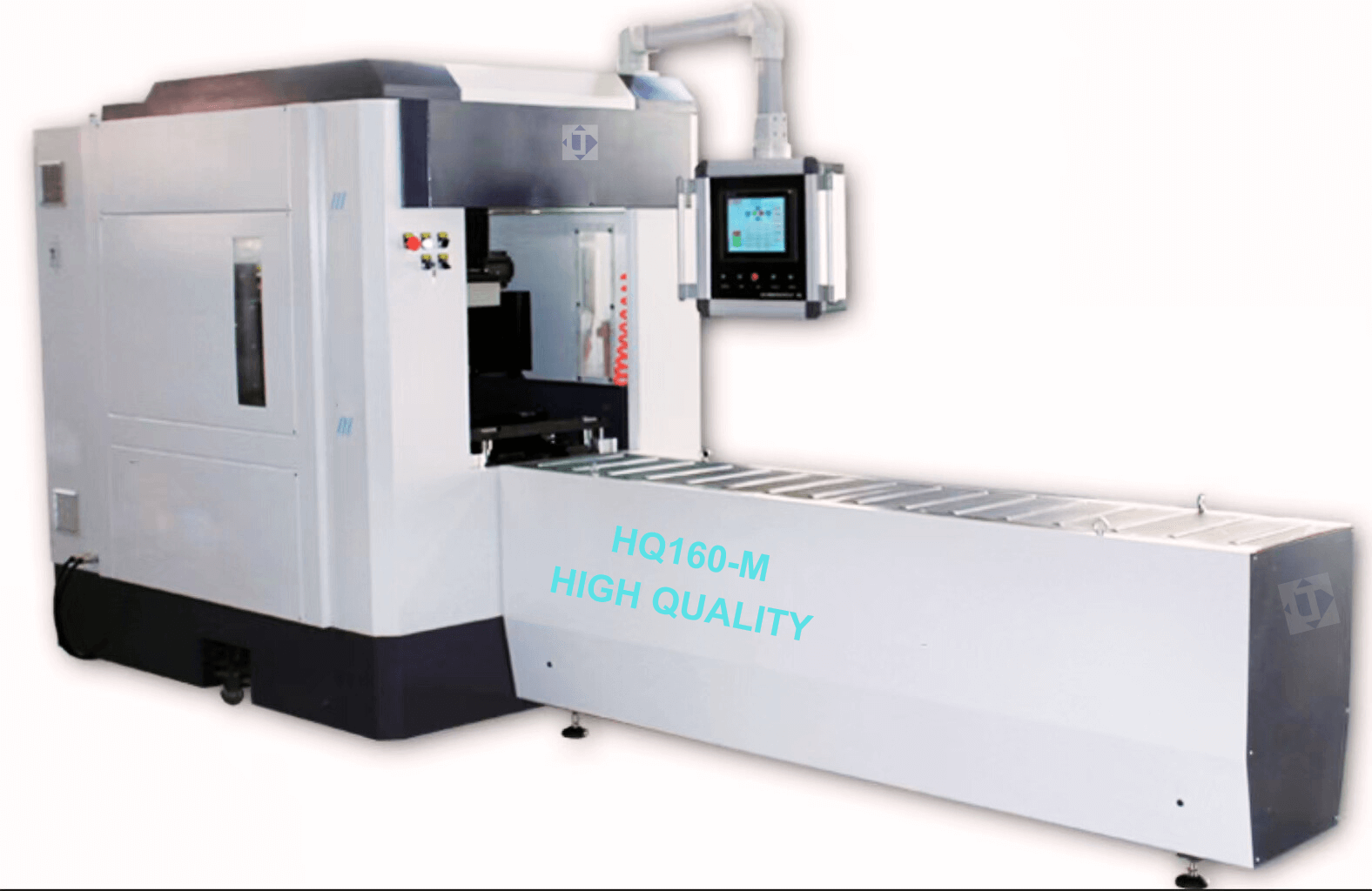
The price is around 19,999$.
CNC Busbar Sawing Bending Riveting MACHINE
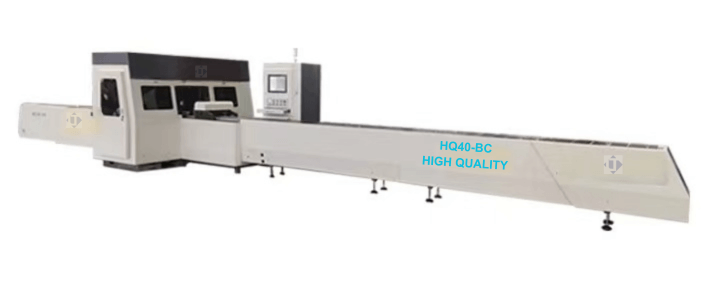
303U-3-CK BUSBAR PROCESSING MACHINE
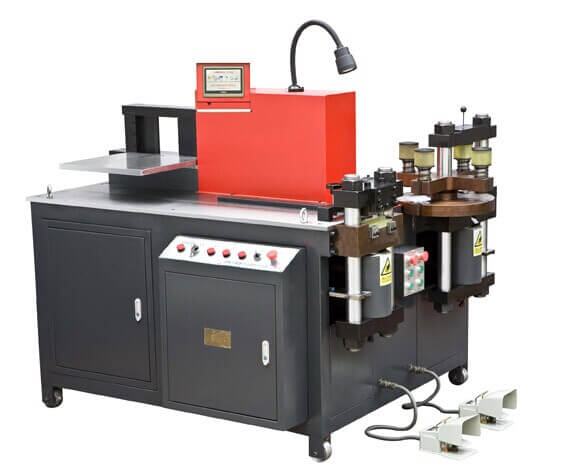
TP30-550/750 DEEP THROAT PUNCHING PRESS
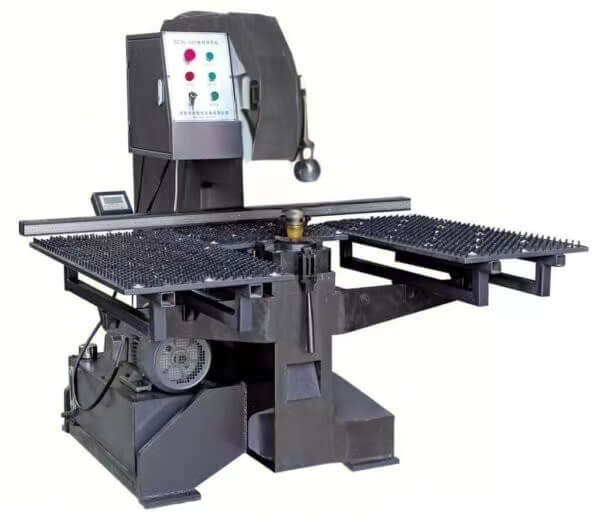
BL-160/260 BUSBAR LEVELLING MACHINE
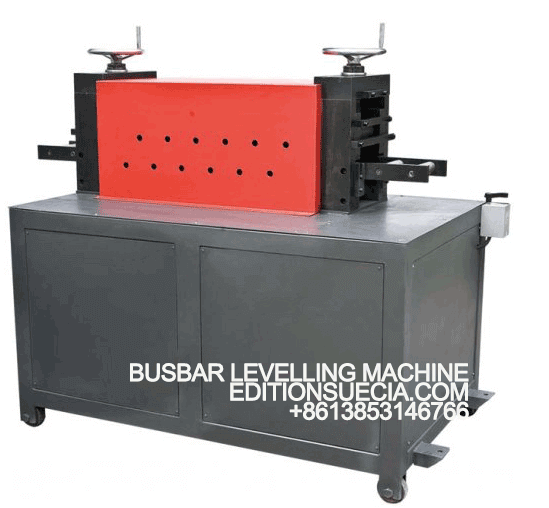
303U-1 BUSBAR PUNCHING BENDING CUTTING MACHINE
503U-3-C HYDRAULIC BUSBAR MACHINE
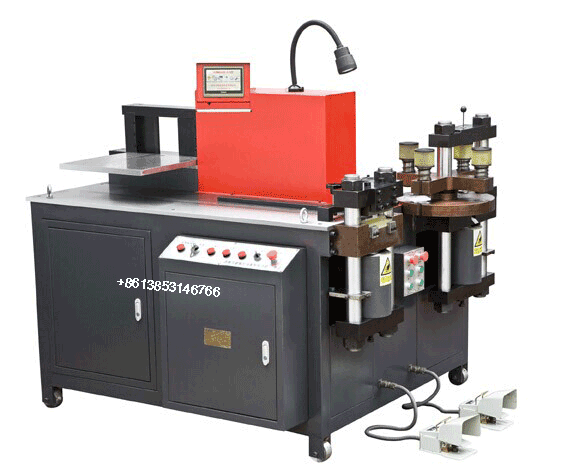
Price 6,300$-19,000$
CNC Busbar Machine
The CNC busbar machine typically involves a variety of tools and equipment, including dies, punches, and bending and cutting tools, to remodel the busbars into specific angles, shapes and structures. These devices are used in manufacturing, construction, and other sectors that rely on electrical power distribution systems.
Busbars are widely used in various industries, including shipbuilding, the manufacture of lifts and cabinets, substations, transformers, electrical switches, and high and low-voltage switchgear.
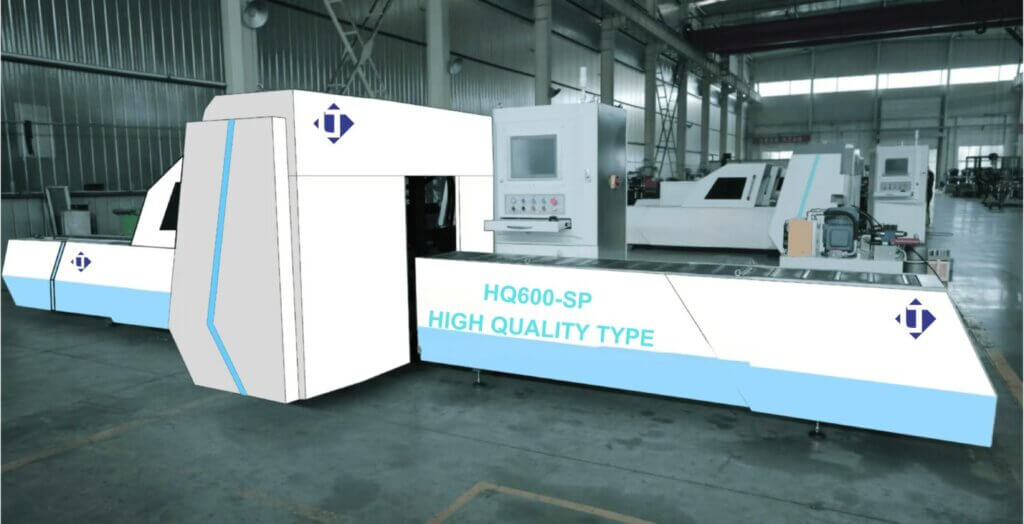
CNC Busbar Machine - What We Offer
Our primary products are conventional CNC Busbar processing equipment and CNC Busway processing equipment.
Our CNC Busbar Machine includes:
- CNC Busbar Punching And Shearing Machine
- CNC Busbar Bending Machine
- CNC Busbar Machines
- CNC Busbar Arc Milling Machine
- CNC Busbar Sawing Bending Riveting Machine
- Busbar Processing Machine
- Deep Throat Punching Press
- Busbar Levelling Machine
- Busbar Cutting Punching Bending Machine
- Hydraulic Busbar Machines
At LT Company, we provide the newest steel busbar, aluminium busbar, and copper busbar fabrication machine to companies of all sizes. Our CNC busbar machine has perfect tolerances among any busbar material. Our dedicated team is always ready to speed up production and minimize scrap. The automation solutions from LT Company will also help with cost and production efficiency! Our machines operate with various materials and are used in numerous industries.
How We Are Different From The Rest
Since its beginning, LT Company has placed innovation at the core of its operations. Our team, culture, and relationships focus on enhancing our offerings regarding goods, services, and delivery. Our service improvement project covers every facet of our operation, but the question that drives real innovation is always:
What can we do to ease our customers' jobs and increase the profit of their businesses?
Does your company process steel, aluminum, or copper busbars? If so, check our website for additional information and contact us immediately with any inquiries.
How CNC Busbar Machines Work
CNC busbar machines are programmed to carry out a variety of jobs with exceptional accuracy. They interpret digital design files and carry out the required procedures to convert raw materials into perfectly shaped busbars. These machines feature specialized tools and dies that can be altered to fit unique project specifications
Benefits of Using CNC Busbar Machines
Precise Cutting
One of the remarkable features of CNC Busbar Machine is their ability to execute high-precision cuts. Our machines are equipped with advanced cutting tools and a computer-controlled system that ensures every cut is accurate to the micrometre and minimizes any errors.
Multiple Cutting Functions
CNC busbar machines are versatile and perform various cutting functions, including straight cuts, perforations, notching, and rounded corners.
Bending and Punching
Apart from cutting, CNC busbar machines can also bend and punch busbars. The bending feature bends busbars at precise angles, while the punching function can create holes and slots as needed.
Automatic Tool Change
To further enhance efficiency, CNC busbar machines switch between different cutting and bending tools without manual intervention, reducing downtime and increasing productivity.
Safety Features
Safety is crucial in manufacturing, and our CNC busbar machines prioritize it. They are equipped with safety features such as emergency stop buttons, protective enclosures, and sensors to detect obstructions and prevent accidents.
FAQs
1. What Is A Busbar Machine?
A specialized machine to cut, punch, bend, and manufacture metal busbars! Implement proactive maintenance strategies to prevent unexpected breakdowns and optimize the performance of your busbar machine. Increase reliability and reduce operational costs. Explore the essential features you should look for in a busbar machine. Read More
2. How To Use A Busbar Machine?
Busbars are crucial components that distribute electrical power within switchgear, control panels, and various other applications. Many professionals rely on busbar machines to fabricate and process these power distribution systems to enhance efficiency and productivity. In this article, we'll dive into how to use a busbar machine effectively and safely. Read More
3. What Are The Functions Of Busbar Machines?
Busbar machines are designed to fabricate busbars, an essential component of power distribution systems. A busbar machine is a specialized piece of equipment used to fabricate and assemble busbars. It automates the production process, making it faster, more accurate, and cost-effective. These machines have various tools and capabilities to cut, punch, bend, and shape conductive materials such as copper or aluminum, commonly used for busbars. Read More
4. Busbar Machines Suitable For What Industry?
Are you wondering which industry can benefit from a busbar machine? Whether you're involved in manufacturing, construction, or any other field, understanding the potential of busbar machines can help you improve efficiency and productivity in your operations. Busbar machines are used in different industries, from Electrical and Electronics to Automotive. Read More
5. How To Choose A Busbar Machine?
Are you in the market for a busbar machine but feeling overwhelmed by the various options available? Investing in the right busbar machine is crucial for several reasons. Whether you're a seasoned professional or new to the industry, we'll walk you through the essential factors to consider when choosing a busbar machine. A high-quality machine will provide consistent results, minimizing errors and rework. Read More
Locations

Busbar Bending and Punching Machine in India

Busbar Bending Machines in China

Busbar Bending and Punching Machine in Turkey
General Questions
Q1: What is a busbar machine?
A busbar machine is specialized equipment used to process copper or aluminum busbars for electrical control panels. It can perform operations such as cutting, punching, bending, embossing, and twisting with high precision.
Q2: What are the main types of busbar machines?
The main types include:
Busbar Cutting Machine
Busbar Punching Machine
Busbar Bending Machine
Combined Busbar Processing Machine (3-in-1 or 6-in-1)
CNC Busbar Machine (fully automatic type)
Q3: What materials can busbar machines process?
They are mainly used for copper and aluminum busbars, typically in thicknesses from 3 mm to 15 mm and widths from 15 mm to 200 mm (or more).
Q4: What industries use busbar machines?
Common industries include:
Electrical switchgear and control panel manufacturing
Power distribution systems
Renewable energy equipment (solar, wind)
Transformer and substation assembly
Rail, shipbuilding, and heavy industry sectors
Technical & Performance Questions
Q5: What’s the difference between a hydraulic and CNC busbar machine?
Hydraulic busbar machines require manual adjustment and are ideal for small workshops.
CNC busbar machines offer computer-controlled precision, automatic feeding, and higher efficiency—best for mass production.
Q6: How accurate is a CNC busbar bending machine?
High-end CNC models can achieve ±0.1 mm bending accuracy and ±0.3° angle accuracy, depending on setup and material.
Q7: What power supply do these machines require?
Most machines use three-phase power (typically 380V/50Hz or 415V/60Hz). Power requirements can vary depending on model and motor size.
Q8: Can the machine store programs?
Yes. CNC busbar machines have a built-in controller or touchscreen that can store multiple bending/punching programs for fast recall.
Operation & Usage Questions
Q9: Is the machine easy to operate?
Yes. CNC machines feature touchscreen interfaces, graphical programming, and automatic feeding. Even beginners can learn to operate them within hours.
Q10: Can one operator run the whole machine?
Yes. Most models are designed for single-operator use, increasing efficiency and reducing labor costs.
Q11: How long does it take to set up a new job?
Manual machines take 5–10 minutes to adjust; CNC models only require program selection, so setup time is under 1–2 minutes.
Maintenance & Safety Questions
Q12: What kind of maintenance is required?
Keep the hydraulic oil clean and replace it every 6–12 months.
Regularly check and lubricate moving parts.
Clean the worktable and sensors daily.
Inspect blades, punches, and dies for wear.
Q13: How safe is the machine?
Modern busbar machines include:
Emergency stop buttons
Safety doors or light curtains
Overload and overheating protection
Auto-stop sensors for misfeeds or malfunctions
Purchase & After-Sales Questions
Q14: How do I choose the right busbar machine?
Consider:
Busbar size range (width, thickness)
Production volume
Available space and power supply
Required functions (cut, punch, bend, emboss, etc.)
Automation level (manual, semi-auto, CNC)
Q15: What is the delivery time?
Usually 15–30 days after order confirmation, depending on customization.
Q16: Do you provide training?
Yes. Most suppliers offer on-site or online training, including installation guidance, operation instructions, and maintenance tips.
Q17: What’s the warranty period?
Standard warranty is 12 months, covering core components (hydraulic, electrical, and control systems).
Q18: Can the machine be customized?
Absolutely. Custom sizes, tool shapes, dies, software interfaces, and even logos can be tailored to meet your specific needs.
Additional Questions
Q19: Can the machine connect to CAD drawings?
Yes. Advanced CNC models can import CAD or solidworks files for automatic processing paths.
Q20: Is there remote technical support?
Yes. Many suppliers offer online diagnostics and remote updates via Wi-Fi or USB
Q21: What materials can your busbar machines process?
Our machines are suitable for copper and aluminum busbars, typically up to 15mm thick and 160mm wide (custom sizes available on request).
Q22: What’s the difference between a manual, hydraulic, and CNC busbar machine?
Manual – basic, cost-effective, ideal for small workshops.
Hydraulic – higher power and precision, good for medium production.
CNC (Computer Numerical Control) – automatic positioning, programming, and feeding for mass production with maximum accuracy and speed.
Q23: How accurate is your CNC busbar machine?
Our CNC busbar bending and punching machines achieve up to ±0.1mm positioning accuracy and ±0.3° bending accuracy, ensuring perfect results for each operation.
Q24: How easy is it to operate?
Very easy! CNC machines feature a touchscreen control panel, automatic program storage, and user-friendly software. Even new operators can learn within a few hours.
Q25: What is the typical production speed?
It depends on the model, but CNC busbar machines can process 500–800 holes or bends per hour, saving time and reducing labor costs.
Q26: What power supply is required?
Standard models use three-phase 380V or 415V, 50/60Hz. We can customize the voltage to match your country’s standards.
Q27: How do I maintain a busbar machine?
Regular maintenance keeps performance stable:
Change hydraulic oil every 6–12 months.
Clean work tables and sensors daily.
Lubricate moving parts regularly.
Inspect punches, dies, and blades for wear.
Q28: What safety features are included?
All machines include:
Emergency stop buttons
Safety doors or covers
Overload and overheating protection
Optional light curtain sensors for operator safety
Q29: Can I connect the CNC busbar machine to CAD drawings?
Yes. Our CNC software supports solidworks file import, allowing you to design busbars in AutoCAD and send them directly to the machine for automatic processing.
Q30: What’s the warranty period?
We offer a 12-month warranty for the whole machine, including hydraulic, electrical, and control systems. Lifetime technical support is available.
Q31: Do you provide installation and training?
Yes. We provide on-site installation, commissioning, and operator training. Online video guidance and remote support are also available.
Q32: Can your machines be customized?
Absolutely! We can customize:
Worktable size
Tooling and dies
Color and logo branding
Software language
Automation level (semi-auto or full CNC)
Q33: How long is the delivery time?
Usually 15–30 days after receiving the deposit. Urgent orders or customized designs can be discussed individually.
Q34: What after-sales service do you provide?
We provide lifetime technical support, spare parts supply, and remote diagnostics via video or online connection. Global engineers are available for on-site service if needed.
Q35: Why choose our busbar machines?
1.Precision and durability
2. Reliable hydraulic and CNC systems
3. User-friendly design
4. Competitive price with global support
5. CE / ISO certified
Q36: What are your accepted payment terms?
We usually accept:
T/T (Telegraphic Transfer) — 30% deposit, 70% balance before shipment.
L/C (Letter of Credit) — at sight, for large or government projects.
Western Union / PayPal — for sample orders or spare parts.
Other payment options can be discussed based on order value and destination.
Q37: Do you accept international trade terms like CIF, FOB, or EXW?
Yes, we can ship under all major Incoterms 2020 conditions:
EXW (Ex Works): You arrange pickup from our factory.
FOB (Free on Board): We deliver to your nominated port in China.
CFR / CIF (Cost, Insurance & Freight): We handle shipping and insurance to your destination port.
DAP / DDP: Door-to-door delivery available for certain countries.
We help you choose the best option based on your location and logistics preference.
Q38: What currencies do you accept?
We can accept USD, EUR, and CNY (RMB) payments. Other currencies may be converted at the current exchange rate.
Q39: How long is the production and delivery time?
Standard delivery is:
15–20 days for standard models
25–30 days for customized machines
Shipping time: typically 20–40 days depending on destination port
Q40: How is the machine packed for export?
All machines are packed with:
Plastic film wrapping to protect against moisture
Foam and steel reinforcement for stability
Standard export wooden cases meeting international shipping standards
This ensures the machine arrives safely and in perfect condition.
Q41: Which ports do you usually ship from?
We mainly ship from Qingdao Port, but can also use Shanghai, Ningbo, or Tianjin upon request.
Q42: Can you arrange shipping for us?
Yes. We work with reliable international freight forwarders to arrange sea freight, air freight, or rail delivery to your destination.
You can also use your own forwarder if preferred.
Q43: What documents will I receive for customs clearance?
We provide all necessary export documents, including:
Commercial Invoice
Packing List
Bill of Lading
Certificate of Origin (Form A, E, etc.)
Insurance Certificate (for CIF terms)
Test Report / CE Certificate (if required)
Q44: Do I need to pay import tax or customs duty?
Yes, import taxes and duties depend on your local regulations.
We can assist you by providing correct HS Codes and declaring reasonable values to reduce costs legally.
Q45: Can I inspect the machine before shipment?
Of course! You’re welcome to visit our factory for inspection, or we can send you photos, videos, and online live tests before shipment.
Q46: Do you offer OEM or branding service?
Yes. We can print your company logo, custom color, and model nameplate on the machine to match your brand.
Q47: How do I install the machine after it arrives?
We provide:
Detailed English manuals and videos
Online installation guidance
On-site engineer service (available by arrangement)
Our machines are plug-and-play — easy to install and commission.
Q48: How can I get spare parts or accessories later?
You can order directly from us. We maintain full spare parts stock and ship parts by air courier (DHL, FedEx, UPS) within 24 hours.
Q20: What currencies do you accept?
We accept USD, EUR, and CNY (RMB). Other currencies can be arranged with conversion at the current exchange rate.
Q49: What is the normal production and delivery time?
Standard models: 15–20 working days after deposit
Customized machines: 25–30 days depending on design
Shipping time: 20–40 days, depending on destination port and logistics schedule
Q50: How is the machine packed for international shipment?
Every machine is packed securely in strong export wooden cases, with:
Inner plastic film wrapping for moisture protection
Foam and steel supports for impact resistance
Fumigation-free export wooden crates meeting international shipping standards
We guarantee the machine arrives safely and ready for operation.
Q51: Which ports do you ship from?
Our main export port is Qingdao, China, but we can also ship via Shanghai, Ningbo, or Tianjin depending on your preference.
Q52: Can you help arrange shipping?
Yes! We work with professional international freight forwarders to provide sea, air, or rail transport worldwide.
Alternatively, you can use your own agent or forwarder if you prefer.
Q53: What documents will I receive for customs clearance?
We provide a full set of export documents, including:
Commercial Invoice
Packing List
Bill of Lading / Air Waybill
Certificate of Origin (Form A / Form E / RCEP)
Insurance Certificate (for CIF terms)
Test Report or CE Certificate if required
All documents are prepared accurately to ensure smooth customs clearance.
Q54: Do I have to pay import duties or taxes?
Yes, import duties and VAT depend on your local regulations.
We can help by providing the correct HS code and declared value for your customs to minimize costs legally.
Q55: Can I inspect the machine before shipment?
Absolutely! We welcome you to visit our factory for inspection.
If visiting is not convenient, we provide:
Detailed inspection videos
Online live testing via Zoom or WhatsApp video
Full testing reports and photos before packing
Q56: Do you offer OEM or branding service?
Yes, we support OEM customization.
You can choose your machine color, add your company logo, and request a custom model nameplate for your brand.
Q57: How do I install the busbar machine after delivery?
All machines are plug-and-play, with minimal setup.
We provide:
English installation manuals and operation videos
Online guidance via video call
On-site engineer service available for larger orders
Q58: How can I order spare parts or tools later?
You can contact our support team directly. We stock punch dies, bending blades, hydraulic parts, and control systems.
All spare parts are shipped by DHL, FedEx, UPS, or air cargo within 24 hours.
Q59: Do you provide after-sales technical support?
Yes. We offer lifetime technical support via email, video, or remote access.
Our engineers can provide software updates, troubleshooting, and maintenance advice anytime.
Q60: What are your advantages compared to other suppliers?
Over 15 years of manufacturing experience
CE / ISO certified quality system
Strong R&D and customization ability
Fast response, 24-hour online support
Competitive price with high-end performance
Q61: Can you export busbar machines worldwide?
Yes! Our machines have been exported to India, Vietnam, Indonesia, UAE, Poland, Slovakia, Russia, Brazil, Mexico, South Africa, and many other countries.
Q62: Do you provide demo videos or samples?
Yes, we can send you machine working videos and sample busbars processed by our machines to evaluate cutting, punching, and bending precision.
Q63: How do I get a quotation?
Simply send us your busbar size (width × thickness) and required functions (cutting, punching, bending, embossing, etc.), and we’ll send a full quotation within 24 hours including price, shipping cost, and delivery time.
Q64: How long is the lifespan of a busbar machine?
With proper maintenance, the average service life is 10–15 years.
Key components such as the hydraulic system, CNC controller, and main frame are built for long-term industrial use.
Q65: Can I order spare parts after the warranty period?
Yes, of course. We maintain long-term spare part supply for all models, even for machines over 10 years old.
You can order by part number, and we’ll ship by air courier.
Q66: Do you provide warranty extensions?
Yes. We offer an optional extended warranty up to 12 or 24 months at a small additional cost.
This includes free technical consultation, replacement of key parts, and software updates.
Q67: Do you provide on-site installation abroad?
Yes. Our engineers can travel internationally for machine installation, calibration, and operator training.
Alternatively, we can guide your technicians online step-by-step via video call.
Q68: How many operators are required for a CNC busbar machine?
Only one operator is needed to run the entire process.
The CNC feeding, punching, and bending operations are all automatic, reducing labor costs and human error.
Q69: How do you ensure machine quality before shipment?
Each machine goes through a strict 48-hour test run that includes:
Precision calibration of punching/bending units
Hydraulic pressure and motor stability testing
Software and electrical safety inspection
Stable power supply and grounding
Enough space for installation (we provide layout drawings)
Basic hydraulic oil and operating tools
Final quality control approval with test video and report
Q70: What should I prepare before the machine arrives?
Please make sure you have:Two trained operators for initial setup
Q71: What is a busbar machine used for?
A: A busbar machine is designed to cut, punch, and bend copper or aluminum busbars for electrical panels, switchgear, transformers, and power distribution systems.
Q72: What is the difference between CNC and hydraulic busbar machines?
A: CNC machines are computer-controlled, providing high precision and automatic operation. Hydraulic machines are manually operated and suitable for small-scale or maintenance work.
Q73: Do you offer customized machines?
A: Yes, we can customize punching dies, bending angles, working table size, and automation levels according to your production needs.
Q74: What is included in a complete busbar processing line?
A: A full line includes a cutting station, punching station, bending station, and sometimes a CNC controller with automatic positioning and memory function.
Q75: How accurate is the CNC busbar machine?
A: Our CNC machines achieve ±0.1 mm positioning accuracy for precise and repeatable bending and punching.
Q76: What kind of power supply is required?
A: Most machines operate on 380V/50Hz three-phase power, but we can adjust voltage for other countries (220V, 415V, 460V, etc.).
Q77: How to maintain the machine?
A: Regularly clean the working table, lubricate moving parts, and check oil level in the hydraulic system. We provide a detailed maintenance manual with each machine.
Q78: How long is the machine’s lifespan?
A: With proper maintenance, the lifespan can exceed 10 years, especially with our industrial-grade hydraulic and control components.
Q79: Can you supply punching dies and bending tools?
A: Of course. We supply all standard and customized dies for round holes, oblong holes, and special shapes.
Q80: What other products are related to busbar machines?
A: Busbar clamps, connectors, flexible busbars, circuit breakers, hydraulic pumps, and panel accessories.
Q81: What are your trade terms?
A: We usually offer FOB Qingdao / Shanghai / Tianjin, CIF, or EXW terms. CIF includes shipping and insurance to your port.
Q82: What’s your payment term?
A: Normally 30% deposit in advance, 70% before shipment. For regular clients, flexible terms are available.
Q83: How long is delivery time?
A: Standard machines: 7–15 days after deposit.
Big CNC machines: 20–45 days depending on specifications.
Q84: Can you arrange shipment for us?
A: Yes, we can handle sea freight (CIF) or door-to-door delivery depending on your location.
Q85: Can you provide test videos before shipment?
A: Absolutely. We test every machine with copper busbars and share detailed working videos before packing.
Q86: Can we visit your factory?
A: Welcome anytime! We’re located in Jinan, China, only 1.5 hours from Beijing by high-speed train.
Q87: How to choose the right busbar machine for my factory?
A: First, check your busbar material (copper or aluminum), thickness, and production volume.
If you need high accuracy and mass production, choose a CNC busbar processing machine.
If your work is manual or low-volume, a hydraulic manual type is more economical.
We can help you select the most suitable model based on your samples and factory layout.
Q88: What size of busbar can your machine handle?
A: Standard models process up to 15 mm thickness and 160 mm width.
We can customize up to 20 mm thickness and 200 mm width if required.
Q89: What is the bending compensation for copper busbars?
A: When bending busbars, copper has spring-back.
The compensation angle usually ranges 2°–5°, depending on material hardness and thickness.
Our CNC software automatically adjusts the bending angle for perfect accuracy.
Q90: How to avoid scratches on copper busbars during processing?
A: Use protective films, clean the working table regularly, and ensure dies are smooth and oil-free.
Our machines have Teflon-coated work surfaces to reduce friction and prevent marks.
Q91: What causes inaccurate punching positions?
A: The main causes are improper clamping, die wear, or incorrect coordinates.
CNC models have automatic positioning systems and laser alignment to eliminate this problem.
Q92: Can I connect the CNC busbar machine to my computer or ERP system?
A: Yes. Our CNC controller supports USB import and optional Ethernet communication for data transfer and production tracking.
Q93: What software do you use for CNC control?
A: We use an independent numerical control system with English interface, easy for global users.
It supports program storage, auto sequence, and angle compensation.
Q94: How can I check machine quality before shipping?
A: We provide video inspection, live online testing, and third-party inspection (like SGS or TUV) upon request.
Q95: Do you supply factory layout design for busbar production lines?
A: Yes, we can provide factory layout drawings, equipment placement design, and workflow suggestions based on your available space.
Q96: What training do you offer for new users?
A: We offer:
Complete operation video tutorials
Remote video call training
On-site technician service (optional)
English operation manual and maintenance guide
🌍 Global Shipping, Customs & Certificates FAQs
Q97: Can you ship worldwide?
A: Yes! We have exported to India, UAE, Indonesia, Egypt, Turkey, Vietnam, Saudi Arabia, South Africa, and Europe.
Q98: What documents will you provide for customs clearance?
A: We supply:
Commercial Invoice
Packing List
Bill of Lading
Certificate of Origin
CE Certificate
Test Report (if required)
Q99: Do you provide CE or ISO certification?
A: Yes, our machines are CE-certified and our factory follows ISO9001 quality management system.
Q100: How is the machine packed for export?
A: Each machine is packed in strong fumigation-free wooden cases with film wrapping to protect from moisture and vibration.
Q101: Can I buy under CIF, FOB, or DDP terms?
A: Yes — we can quote FOB China Port, CIF to your destination port, or even DDP (door-to-door) upon request.
🔧 After-Sales, Warranty & Spare Parts FAQs
Q102: How to replace punching or bending dies?
A: It’s quick — just loosen the die fixing bolts, replace the die, and recalibrate.
We provide a full set of manuals and video tutorials.
Q103: What spare parts are included with the machine?
A: Standard package includes spare seals, punching pins, Allen keys, and hydraulic oil fittings.
Q104: What if my machine has a problem after warranty?
A: We provide lifetime technical support — you only pay for replacement parts, not for service time.
Q105: What languages do you support?
A: We can provide English, Spanish, Russian, Arabic, and Chinese operation manuals and interface versions.
Q106: How can I get a quotation?
A: Just tell us the busbar size, material, and your required capacity — we’ll send you a full quotation with CIF/FOB prices within 24 hours.
Q107: Do you provide sample processing service?
A: Yes. You can send us your busbar drawing; we’ll process a sample video to show machine performance.
Q108: What is your minimum order quantity (MOQ)?
A: One set only — we support small orders and trial purchases.
Q109: Can I combine different machines in one container?
A: Yes, we can combine multiple models (busbar machine + punching press + hydraulic tools) in one shipment to save freight cost.
Q110: How can I become your distributor or agent?
We welcome global distributors and regional partners.
We provide:Exclusive price policy
Marketing materials and videos
Technical training and after-sales support
If you’re interested, please contact our sales team for cooperation detail.
In-Depth Guide to Busbar Machines for Modern Electrical Manufacturing
As electrical systems become more compact, higher in capacity, and more standardized, the demand for high-precision busbar machines continues to grow. From switchgear manufacturers to panel builders and energy infrastructure suppliers, efficient busbar processing has become a critical factor in production quality, assembly accuracy, and long-term system reliability.
A busbar machine is designed to process copper or aluminum busbars through punching, cutting, bending, and forming operations. Compared with traditional manual methods, modern CNC busbar machines provide consistent accuracy, repeatability, and significantly reduced human error. This is especially important in high-volume production environments where even small dimensional deviations can lead to costly assembly problems.
Why CNC Busbar Machines Are Becoming the Industry Standard
The transition from manual or semi-automatic processing to CNC busbar machines is driven by several key factors. First, CNC control systems ensure precise positioning and stable processing accuracy, even during long production cycles. Second, automated busbar processing greatly improves efficiency by combining multiple operations into a single workflow. Finally, CNC systems allow manufacturers to store and reuse programs, making it easier to maintain consistent quality across different projects and batches.
For manufacturers producing low-voltage and medium-voltage switchgear, CNC busbar machines also help meet increasingly strict industry standards. Accurate hole positioning and bending angles directly affect electrical contact performance and installation efficiency. By using CNC-controlled busbar processing equipment, manufacturers can reduce rework, minimize material waste, and achieve a more predictable production outcome.
Selecting the Right Busbar Machine for Your Application
Choosing the right busbar machine depends on several practical considerations. Material type is one of the most important factors, as copper and aluminum have different mechanical properties and processing requirements. Busbar dimensions, including thickness and width, also determine the required machine capacity and tooling configuration.
Production volume and automation level should be carefully evaluated as well. For small workshops or customized production, a modular CNC busbar machine may offer the best balance between flexibility and cost. For larger factories with continuous output, an integrated automatic busbar processing line can significantly improve efficiency and labor utilization. In all cases, machine stability, tooling quality, and after-sales technical support should be considered just as important as the initial purchase price.
Applications Across Multiple Electrical Industries
Busbar machines are widely used across a broad range of electrical manufacturing sectors. Typical applications include power distribution panels, LV and MV switchgear systems, transformer assemblies, and energy storage equipment. With the rapid growth of renewable energy and electric vehicle infrastructure, the demand for reliable busbar processing solutions continues to expand.
By investing in a suitable CNC busbar machine, manufacturers can adapt more easily to changing market requirements while maintaining consistent quality standards. Whether for standardized mass production or customized electrical solutions, advanced busbar processing technology provides a solid foundation for long-term competitiveness.
Busbar Machine FAQs
Q1: What materials can a busbar machine process?
A busbar machine is mainly used to process copper and aluminum busbars. With proper tooling, CNC busbar machines can handle different material thicknesses and widths reliably.
Q2: What is the difference between a CNC busbar machine and a manual busbar machine?
A CNC busbar machine offers higher accuracy, repeatability, and production efficiency compared to manual processing. CNC control reduces human error and ensures consistent quality across batches.
Q3: How accurate is a CNC busbar machine?
Processing accuracy depends on machine configuration and tooling quality. In general, CNC busbar machines provide stable and repeatable positioning accuracy suitable for switchgear and panel manufacturing.
Q4: What industries commonly use busbar machines?
Busbar machines are widely used in switchgear manufacturing, panel boards, transformers, energy storage systems, and industrial power distribution applications.
Q5: How do you maintain a busbar machine?
Regular inspection, proper lubrication, timely tooling replacement, and basic CNC system checks help maintain stable performance and extend machine service life.